
Notes
Everything else gets better with use.
A stone stair walked on for four hundred years is not damaged. It is finished. Almost everything people keep and use for a long time ends up better than it started, and the improvement is made of nothing but use. Software is the exception. It is the one category of thing you can own that reliably gets worse the longer you have it, and we would like to understand why, because we make it for a living.
The hollow
Look at an old stone stair closely and the interesting thing is not that it is worn. It is where. The hollow is never in the middle of the tread. It sits slightly off centre, on the line a person actually walks, deeper on the flights people climb in a hurry and shallower on the ones they take slowly. Nobody drew that shape. There is no drawing of it anywhere. Use drew it, one foot at a time, and it took longer than any of the people who made it were alive.
It is also the most valuable part of the object. The hollow is a record of everyone who ever climbed those stairs, and it is not only a record: it makes the next climb easier, because your foot finds the low point without being told. The stair learned, and then it taught.
The same thing has happened to a handrail worn glassy along exactly the width of a hand, to a brass door pull with one bright oval where thumbs land, to a cast iron pan whose inside is a black mirror, to a whetstone sagging in the middle from sharpening other tools, to the bronze foot of a statue that strangers rub for luck.A None of them were designed to do this. All of them are better for it.
Why they get better
Four things are true about all of them, and they are worth separating because software gets each one backwards.
They wear in the direction of use.
Material leaves where the work happens and stays where it does not. Nothing about that is a metaphor. Over a long enough time the object becomes a physical cast of its own job, and the cast is more accurate than any specification of it could have been, because it was taken from the real thing rather than from somebody's idea of the real thing.
They keep no secrets.
Everything true about a hand plane is on its surface. You can pick one up in a junk shop and know within four seconds how hard its life was, how it was held, whether it was cared for, and whether it will work. There is no version number to ask about and no state you cannot see.
Their owner can maintain them.
Sharpen it, oil it, season it, put a new handle on it. No permission, no vendor, no support window, no migration. The person holding the object is fully qualified to keep it alive, and the knowledge required is the same knowledge required to use it.
They fail slowly and out loud.
A rope frays for a long time before it parts. A handle loosens before it comes off. Nearly everything good announces its own decline, in the open, to whoever is using it, well before the decline matters. Failure is a gradient, not an event.
Software gets all four backwards
It wears in the direction of shipping, not use. A release moves things, because moving things is most of what a release is. The place your hand learned over three years gets relaid on a Tuesday afternoon by people who will never watch you look for it. The hollow you wore into the product is not preserved: it is not even recorded. It was never anywhere except in your hands.B
It is almost entirely hidden state. Nothing true about a piece of software is on its surface. The screen is a rumour about the state, rendered a moment ago, by code you cannot see, against data you cannot check.
Only the vendor can maintain it. The person holding the thing is not qualified to keep it alive and is not permitted to try. Everything that keeps it working happens somewhere else, at somebody else's convenience, and stops when they decide it stops.
And it fails instantly and quietly. This is the worst of the four. A rope that frayed invisibly and then parted without warning would be recalled. Software does exactly that, every day, and we have all agreed to describe it as an outage rather than a defect in the design of the thing.
The obvious objection, which is correct
The objects get better because they do not change. A stone step is never asked to support a new file format, a new rule, a new operating system or a new law. It holds still and the world holds still around it, and that is the entire trick.
Software is not allowed that. It has to change or it stops being true, and a piece of software that is no longer true is worse than no software at all, because people still believe it. So the comparison is unfair, and the unfairness is exactly where the useful question is.
The question is not how to stop changing. It is what has to stay still while everything else moves.
Six of seven
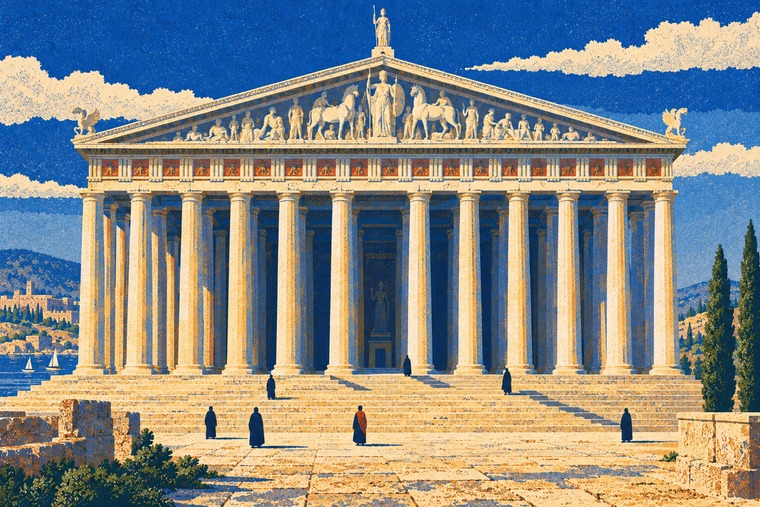
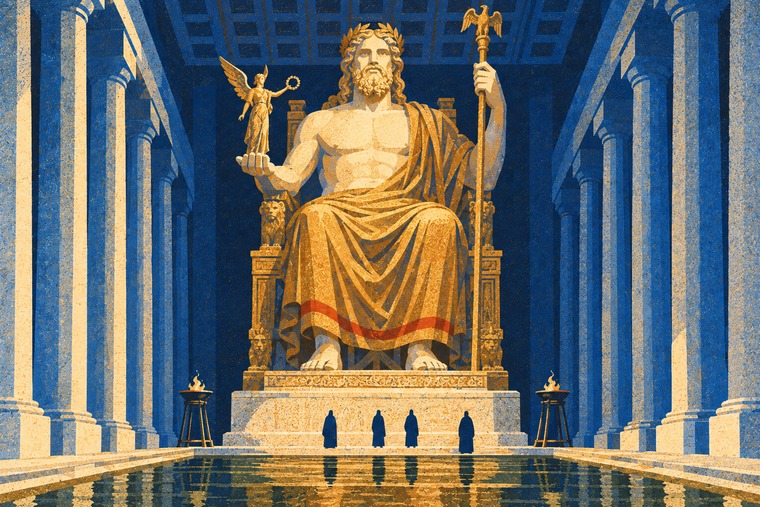
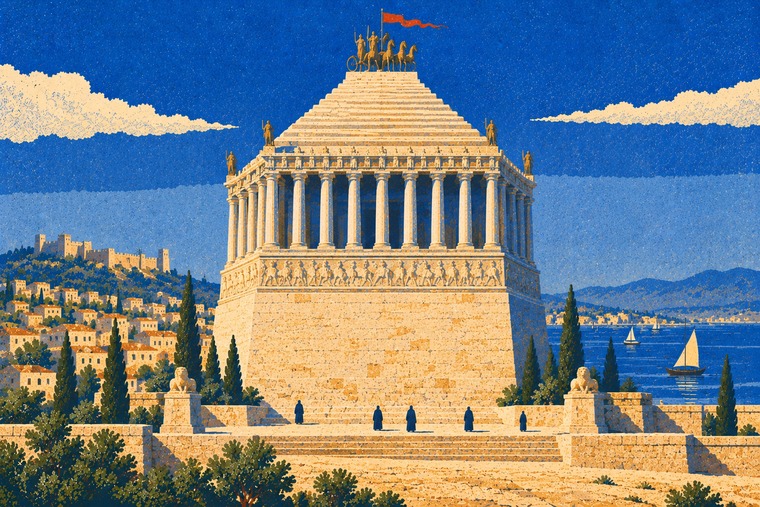
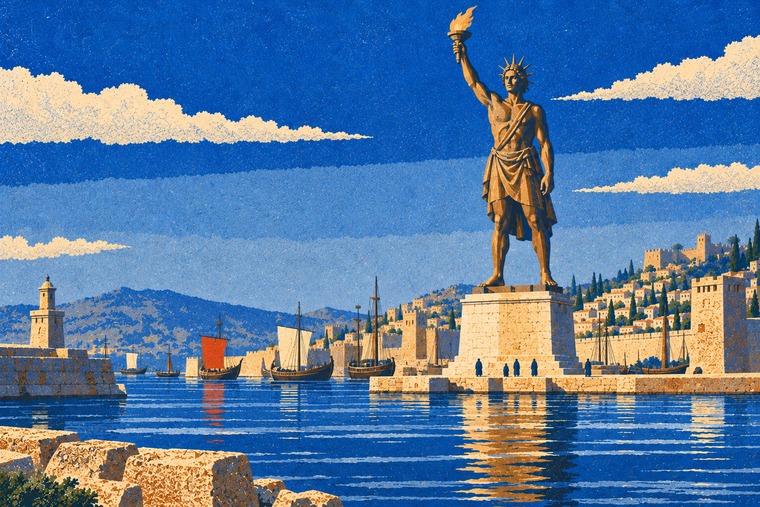
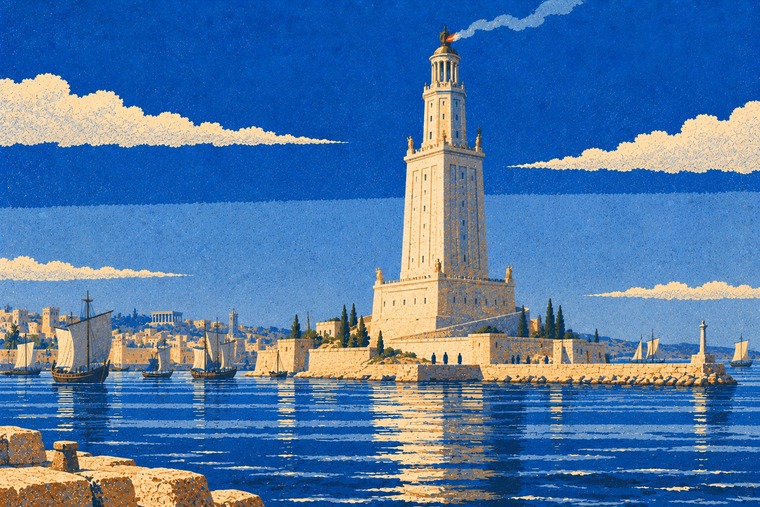
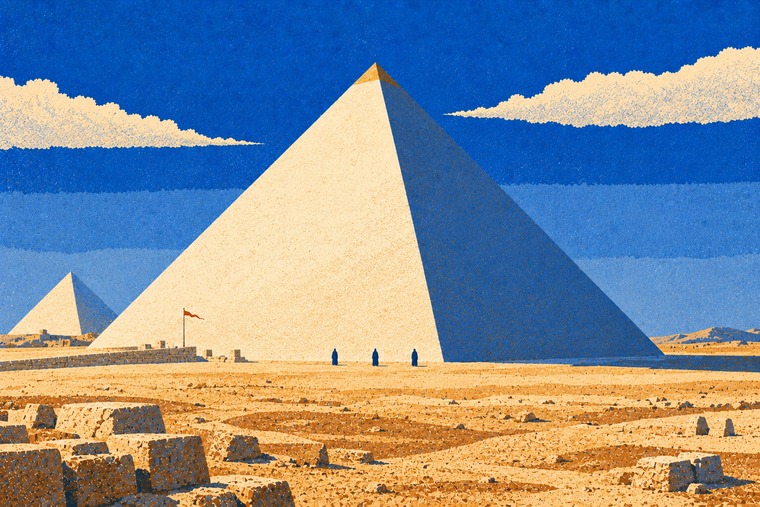
Seven wonders were listed in the ancient world. Six of them are gone. The one still standing is the plainest of the seven, and it is the only one in this row you can go and look at.
Six of seven
Somebody in the ancient world made a list of seven things worth travelling to see. Six of them are gone, and it is worth going through why, because the reasons are the four above with the dates changed.
The Hanging Gardens were green because people lifted the river up them, every day, and on the day that stopped they were a brick hill.E The Lighthouse at Alexandria was a lighthouse for exactly as long as there was a fire at the top and somebody carrying fuel up to it. The Temple of Artemis burned, was rebuilt, burned again, and what survived was quarried for other people's buildings. The Statue of Zeus was ivory and gold over a wooden frame, so it was taken apart. The Colossus of Rhodes fell in an earthquake and lay where it fell for eight centuries, until somebody sold it, because it was thirty metres of valuable metal lying in the open. The Mausoleum stood sixteen hundred years and then an earthquake took it, and the stone went into a castle.
The one still standing is the Great Pyramid, and it is the least clever thing on the list. It has no moving parts. It needs nobody. There is nothing in it that anyone wanted badly enough to carry away — and the one part that was worth taking, the polished white casing, is precisely the part that is missing.
Every one of the other six was lost to a dependency. Somebody had to keep pumping, keep burning, keep rebuilding, or keep guarding something valuable. The survivor is the one that asked for nothing after the day it was finished.
What we hold still
These are not preferences. They are the short list of things we have decided may not move in any release, on the grounds that they are the things a person's hands and habits actually attach to. Everything else is free.
Where things are.
Position is muscle memory, and muscle memory is the only part of a product a person builds for themselves. It takes about a week to acquire and it is gone the instant you move the thing. So the same control lives in the same place on every screen, including the screens where it looks slightly wrong there.
What a shape means.
A shape gets one meaning and keeps it for the life of the product. A pill means choose one of these. A softened square means this commits something. A circle means this is a verb. Once that is true everywhere, a person can read a screen they have never seen before, which is the only real test of whether an interface has a grammar or just a style.
That the machine never takes a bow.
Nothing in our products is labelled as intelligence. There is no badge, no shimmer, no phrase beginning with the words we think. Either the thing states a fact plainly, and stands behind it, or it does not appear on the screen at all. A product that announces when it is being clever is telling you it does not expect to be right.
That a claim carries its source.
One fact, two readers. It is said in plain language for the person who has to act on it now, and quoted exactly, word for word from wherever it came from, for the person who has to defend it later.C Both readers get the same fact. Neither gets a summary of it.
What moves freely is everything else: how fast it is, what a word says when the word is wrong, what the picture looks like, and every part of the plumbing underneath. We change those constantly and we do not ask, because none of them is anybody's muscle memory.
The part we can prove
Durability sounds like a mood, so it is worth pointing at the one version of it that is measurable. This website makes no third party requests. Not fewer than before: none. One font file, served from here, with the arrows in it. No cookies, no analytics, no tag manager, no consent banner, because there is nothing to consent to.D
That is not a boast about speed. It is a statement about how many other people have to stay in business for this page to keep working. A page that depends on nothing can still be served in ten years by anyone with the files. A page that depends on forty things is already decaying, quietly, and nothing on it will tell you.
The hollow is not yours
The last thing about the stair is the part that matters most to us. The hollow belongs to the people who walked it. The architect did not put it there, could not have put it there, and has no business filling it in. It is the only part of the building the people who use it every day actually made.
That is the whole of what we mean by software that holds up. Build the thing so that it can take a hollow. Then leave the hollow alone.
Talk to us
If you disagree with any of this, we would rather hear it than not. ops@byscorp.com.